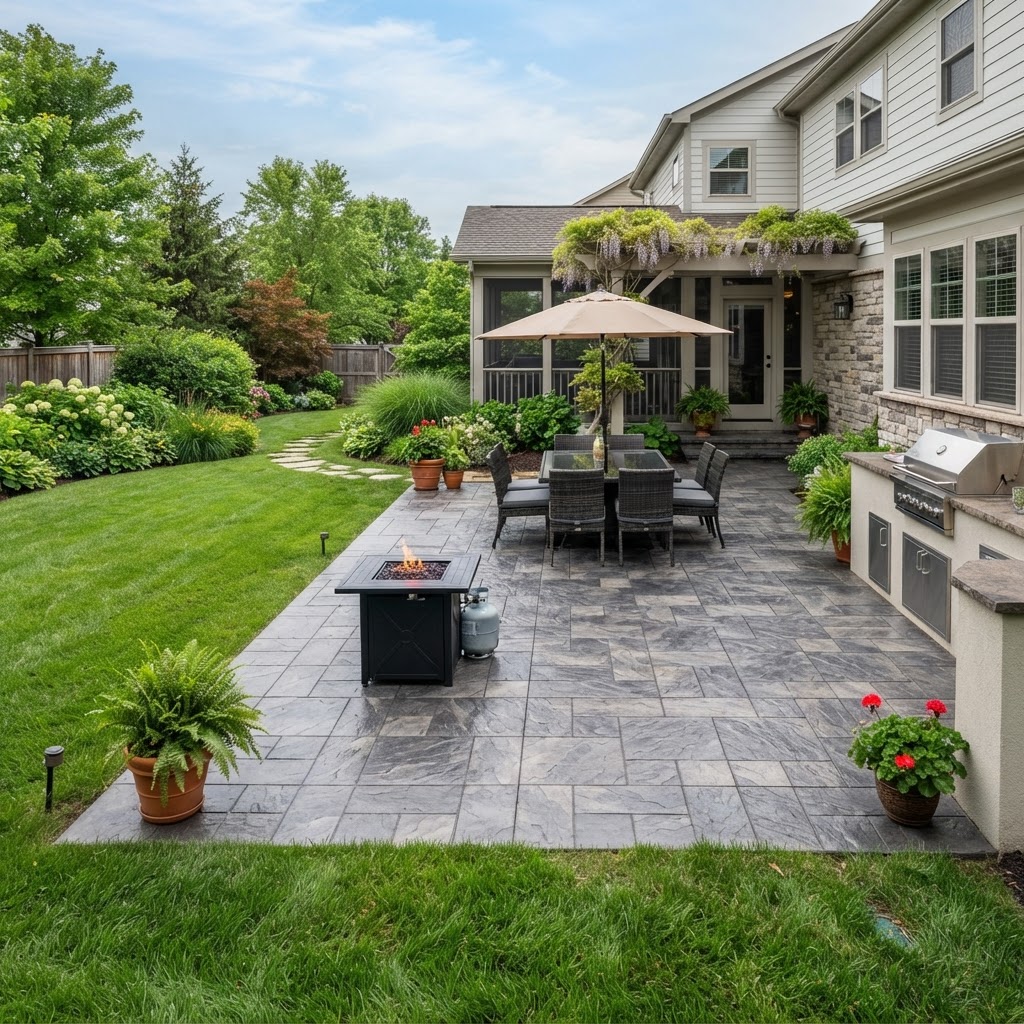
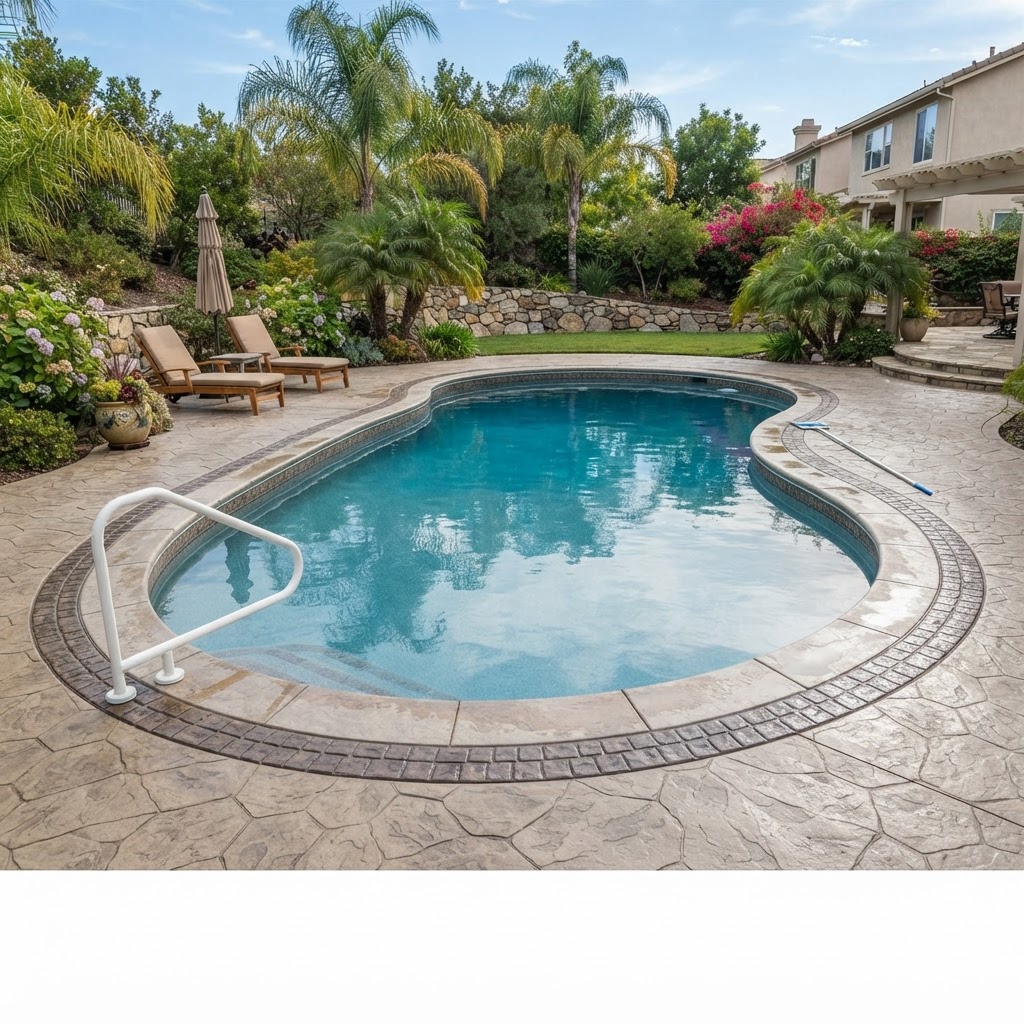
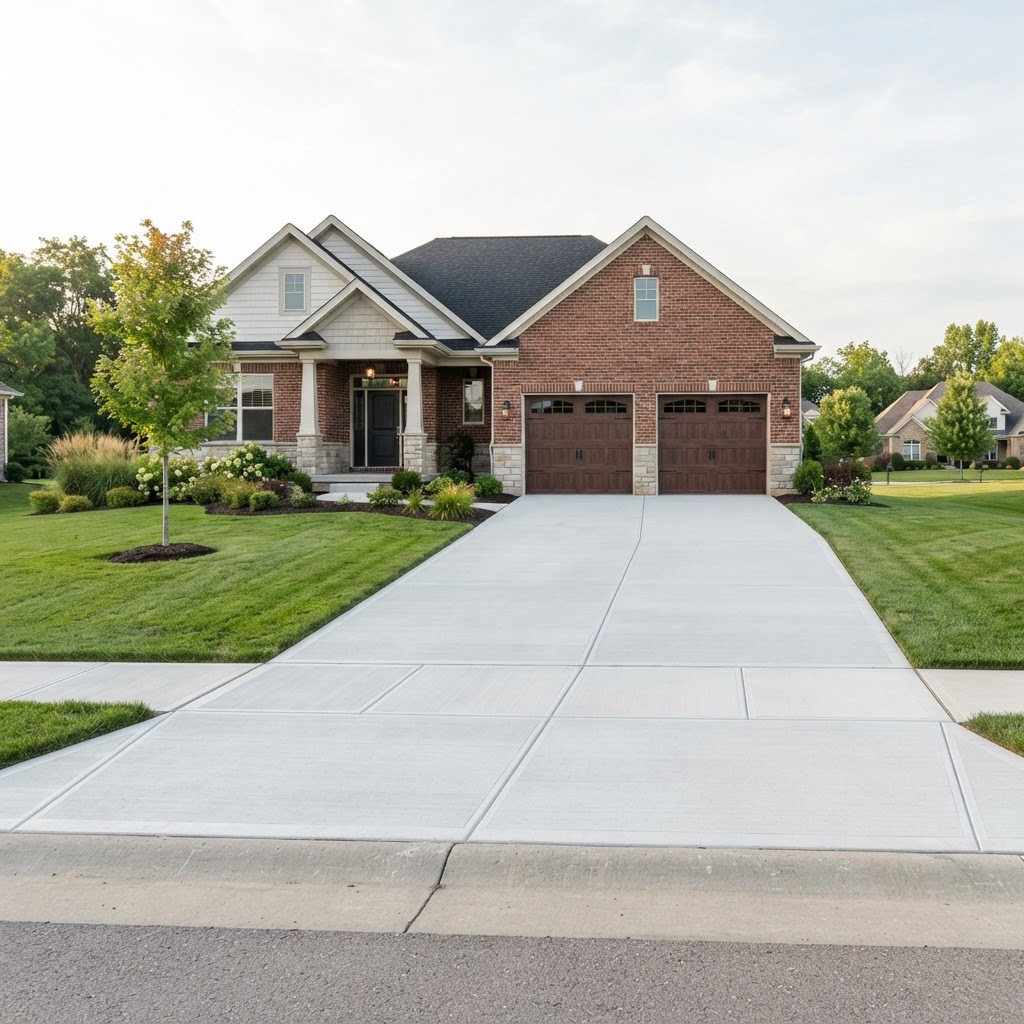
Stamped concrete gives you the look of flagstone, brick, slate or weathered wood for a fraction of what natural stone costs to lay, and it goes down as one continuous slab with no pavers to shift or weeds to pull. Around Noblesville it shows up most on backyard patios in newer Hamilton County subdivisions, on front entry walks, and as a decorative border along a plain driveway.
Noblesville Concrete Contractor connects you with an independent local concrete contractor who does decorative work. Call (317) 798-0634 or use the form to describe your project.
How Stamping Works
The slab is formed and poured like any other flatwork, over compacted stone and with reinforcement. Color goes in one of two ways: integral color mixed into the truck so it runs all the way through, or a color hardener broadcast onto the wet surface. While the concrete is still plastic, the crew lays a powdered or liquid release agent and presses rubber texture mats into the surface in sequence. Edges and tight corners get detailed by hand with flexible "flop" mats and chisels. After it cures, the release residue is washed off, leaving darker tones in the grout lines, and the surface is sealed.
Timing is everything. Stamp too early and the pattern slumps; too late and it won't take. That's why stamped work needs a bigger crew on pour day than a plain patio, and why experience matters more than equipment.
Popular Patterns
- Ashlar slate: rectangular "stones" of mixed sizes. The most requested pattern because it fits almost any house.
- Random stone or flagstone: irregular shapes that read as natural rock, good near landscaping beds.
- Cobblestone or European fan: smaller units for borders, walk edges and courtyard looks.
- Wood plank: board texture with grain, popular around pools and hot tubs.
- Seamless textures: stone texture without grout lines, a subtle choice for large areas.
A common budget move is a broom-finish field with a stamped and colored border 12 to 24 inches wide. You get the decorative look where eyes land without paying to stamp the entire slab.
Picking Colors That Hold Up
Earth tones (buff, sandstone, gray, terra cotta) age more gracefully than bright colors. Darker colors absorb more heat, so think about bare feet if the slab is near a pool or in full afternoon sun. Ask to see the release color against the base color on a sample board, because the two together make the final look.
Sealing and Maintenance in Central Indiana
Sealer protects color, deepens contrast and helps the surface shed water and deicing salt. Most installers recommend resealing every two to three years, depending on sun exposure and traffic. Signs it's time: the color looks chalky or water stops beading. Use a cleaner and sealer the installer approves, and avoid rock salt on stamped surfaces; sand gives traction without the chemical damage. Sealers can be slick when wet, so ask about adding a grit additive to the final coat for steps and pool areas.
Stamped vs. Pavers
Pavers can be pulled up and relaid, and they handle small soil movement without visible cracks. Stamped concrete has fewer joints, no sand to wash out, and usually costs less to install. It will still get control joints, and it can crack like any slab, so the joint layout should be planned into the pattern. Repairs on stamped concrete are harder to blend than a single paver swap. For a deeper comparison, see our patios and stamped concrete page.
Where Stamped Concrete Works Best
Patios, walkways, porches, pool surrounds and driveway borders all suit stamping. Full stamped driveways are possible but get more wear from tires and salt, so they need disciplined sealing. If you're planning an outdoor living area with a fire pit or a pool deck, stamping ties those spaces together visually.
What It Costs
Stamped concrete usually runs well above plain broom finish because of the extra labor, color and sealer. As a typical estimate, many central Indiana projects land in roughly the $12 to $20 per square foot range, with complex multi-color patterns, steps and tight curves higher. That's a planning range, not a quote; an on-site estimate is the only real number. See concrete cost in Noblesville for more.
How Much Does Stamped Concrete Cost?
Stamped concrete costs more than plain concrete because it adds color, stamping labor, release agents and sealer. As a general typical range, stamped patios commonly land somewhere around $12 to $20+ per square foot in central Indiana, but prices vary with pattern, number of colors, borders, size, access and tear-out. Simple single-color patterns cost less than multi-color, hand-detailed stone looks. Plan on resealing over time; see concrete sealing. For more ranges, see our concrete cost guide, and call (317) 798-0634 for a free quote.
Frequently Asked Questions
Want a stamped patio, walk or border?
Call (317) 798-0634 or request a free quote.
Related: Patios · Pool Decks · Outdoor Living Patios · Concrete Costs