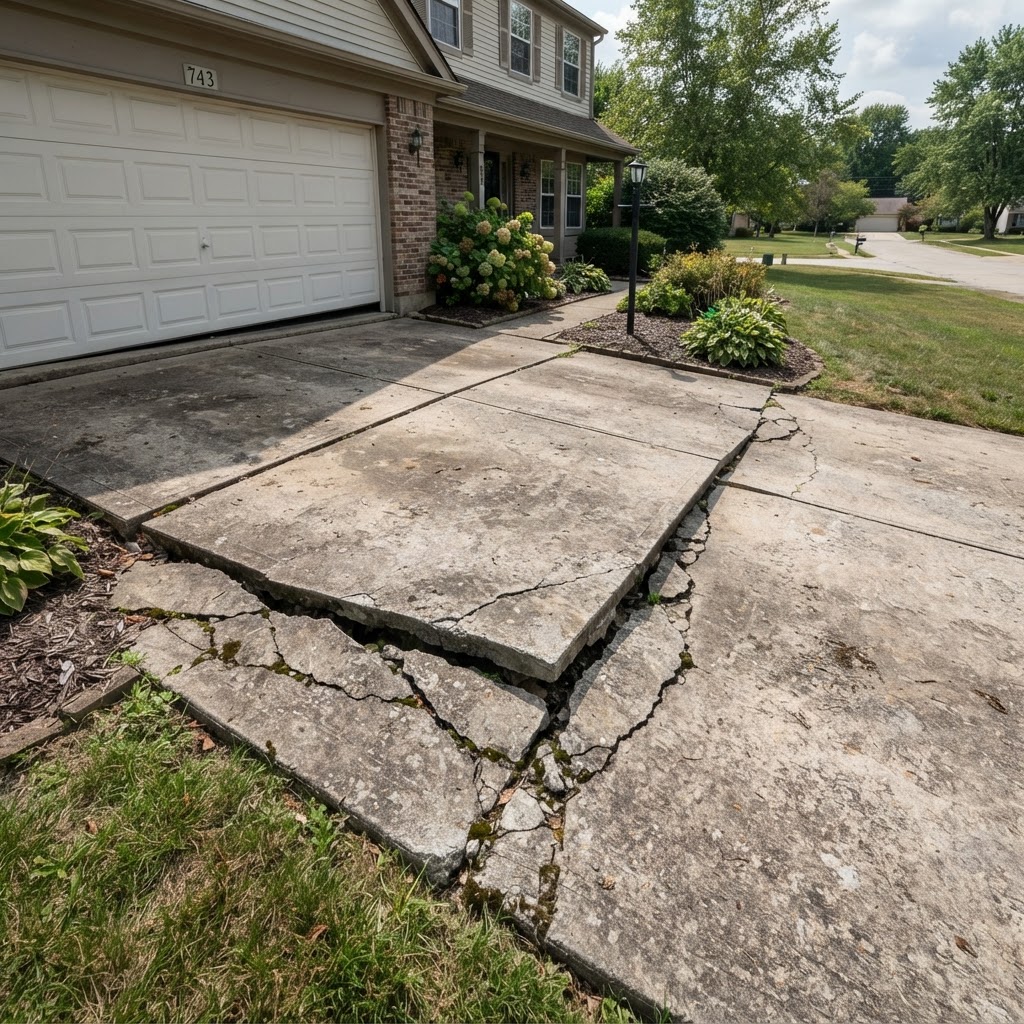
Concrete doesn't fail all at once. It starts with a hairline crack, a corner that sinks a little, a patch of flaking near the garage where salt sat all winter. Left alone, water gets in, freezes, and widens everything. The good news is that a lot of damage can be repaired if you catch it early. The honest news is that some slabs are past saving, and pouring money into patches only delays replacement.
Noblesville Concrete Contractor connects you with a vetted local concrete contractor who can look at your driveway, patio, sidewalk, steps or slab and tell you which situation you're in. Call (317) 798-0634 or use the form above for a free assessment and estimate.
Crack Repair and Sealing
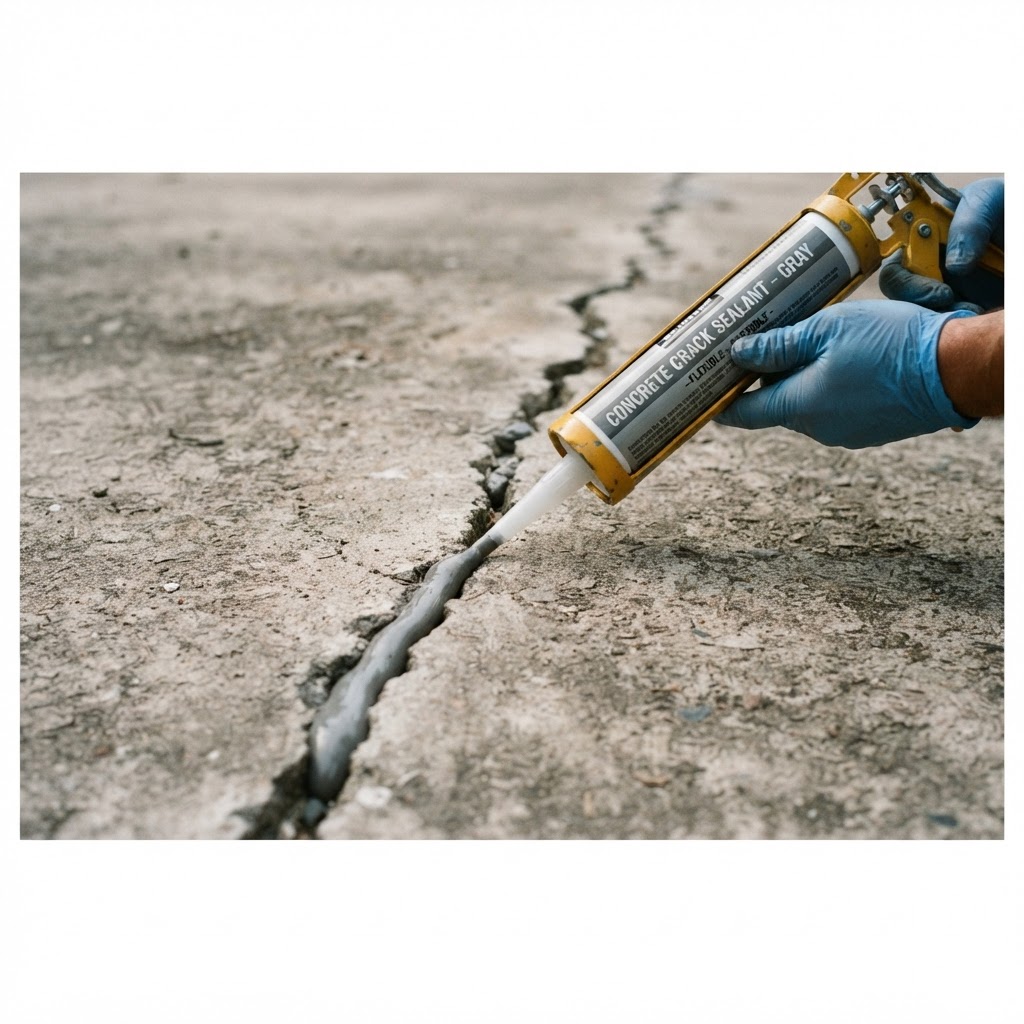
Narrow cracks that haven't shifted up or down can usually be cleaned out and filled with a flexible concrete crack sealant. This keeps water out of the base and slows freeze-thaw damage. Repaired cracks will still show, but sealing them can extend the life of an otherwise sound slab. Cracks that are wide, growing, or offset (one side higher than the other) point to movement underneath and need a closer look.
Concrete Leveling (Mudjacking and Polyjacking)
When a slab section has sunk but is still in one piece (a sidewalk square that dips, a patio that tilts toward the house, a driveway sinking at the garage), it can often be lifted back into place:
- Mudjacking pumps a cement-based slurry under the slab through holes drilled in it.
- Polyurethane foam lifting (polyjacking) injects an expanding foam through smaller holes. It's lighter, cures fast, and is often usable the same day.
HomeGuide puts mudjacking at about $4 to $9 per square foot on average, and notes that many contractors charge minimum job fees of about $300 to $700. Lifting usually costs much less than replacement. It works best on slabs that are intact, not crumbling.
Concrete Resurfacing and Spalling Repair
Spalling is when the top surface of the concrete flakes or pops off, leaving rough, pitted areas. In Noblesville it's often caused by freeze-thaw cycles combined with deicing salts, sometimes made worse by a finish that was overworked when the slab was poured. If the slab underneath is structurally sound, a polymer-modified resurfacer can give it a fresh, uniform surface. Resurfacing doesn't fix a slab that's sinking or broken.
Step, Stoop and Edge Repair
Broken step corners, crumbling stoop edges, and chipped driveway edges can sometimes be rebuilt with repair mortars. Steps pulling away from the house or tipping usually mean the footing has failed, and rebuilding is the safer choice.
Joint Sealing and Caulking
The gaps between your driveway and garage slab, between sidewalk and foundation, and along control joints let water straight into the base. Sealing those joints with a flexible sealant is inexpensive maintenance that helps prevent future settling.
When Replacement Makes More Sense
Repair is often worth trying, but replacement usually wins when:
- The slab is broken into multiple pieces or has many intersecting cracks
- Sections have heaved or sunk unevenly in several places
- Surface damage covers most of the slab
- The base has washed out or was never built right
- Roots are lifting the slab and will keep doing so
- Water drains toward the house and the slope can't be corrected
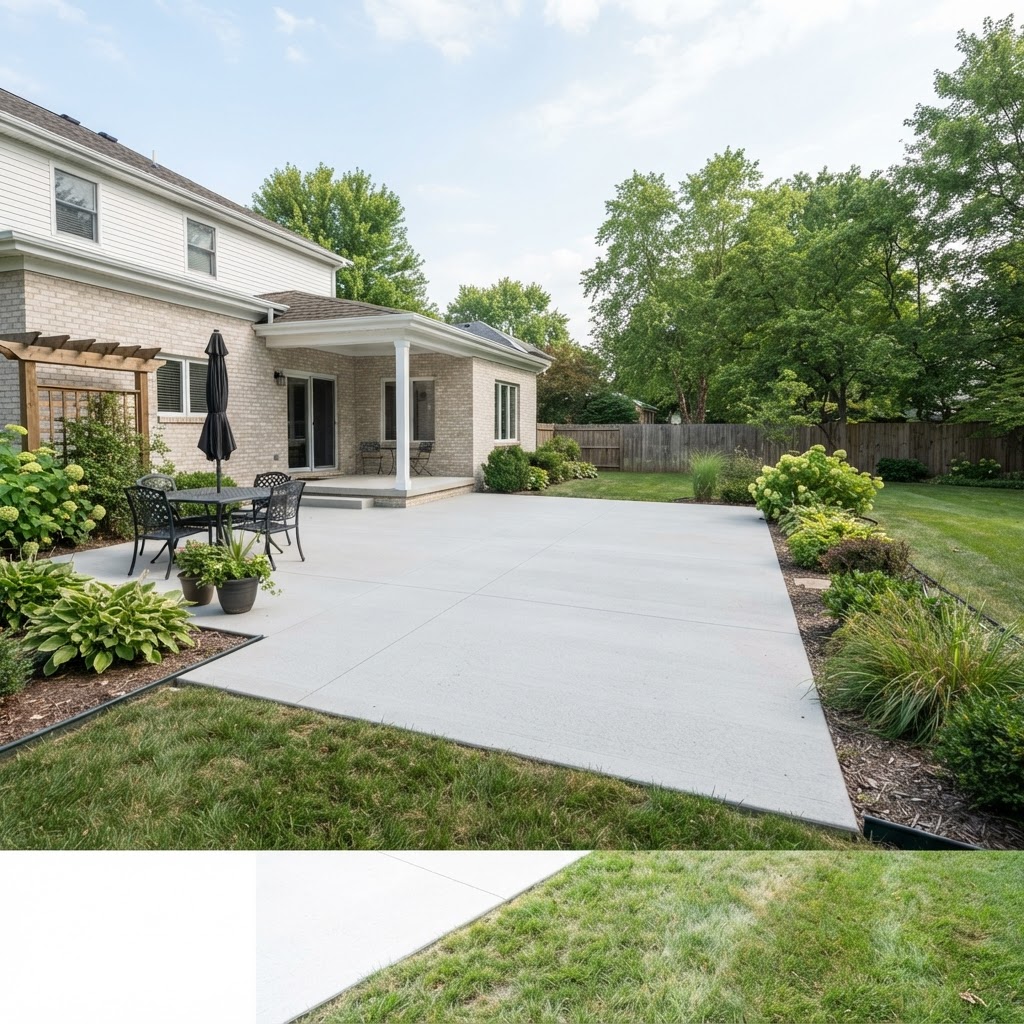
Replacement means removing the old concrete, fixing the base and drainage problems that caused the failure, and pouring new. HomeGuide notes complete slab replacement typically runs about $6 to $15 per square foot. See our driveway, sidewalk and slab pages for what goes into doing it right.
Foundation Cracks: When to Call a Specialist
Cracks in basement walls or structural foundations are a different category from flatwork. Small vertical shrinkage cracks are common. Horizontal cracks, bowing walls, stair-step cracks in block, or doors and windows that suddenly stick can signal structural problems, and you should have a foundation repair specialist or structural engineer evaluate them. The contractor can tell you if your situation is beyond typical concrete repair.
Preventing Future Damage
- Seal exterior concrete every few years
- Avoid ammonium-based deicers. Use sand for traction on new concrete.
- Keep downspouts extended away from slabs and the foundation
- Fill and seal cracks as soon as they show up
- Don't park heavy equipment or dumpsters on thin residential slabs
Frequently Asked Questions
Not sure whether to repair or replace?
Call (317) 798-0634 or send a few photos through the form, and a local concrete contractor will follow up with an honest assessment and free estimate.
Related: Concrete Driveways · Sidewalks · Service Areas