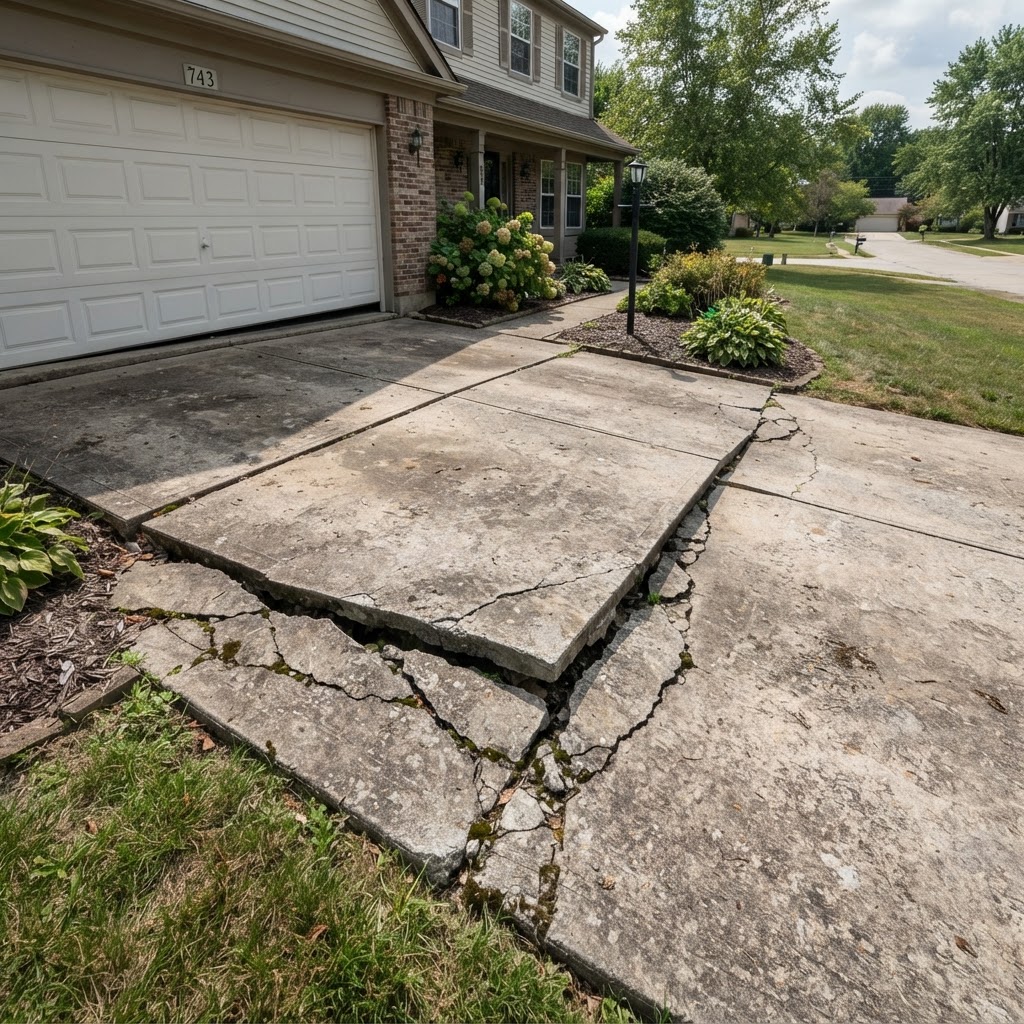
A sunken sidewalk square, a driveway that dips at the garage, or a patio that now tilts toward the house is more than an eyesore. It can trip people, send rainwater toward your foundation and get worse every freeze-thaw season. The good news: if the concrete is mostly in one piece, it can often be lifted back into place instead of torn out.
We connect Noblesville homeowners with an independent local contractor who can look at your slab and tell you whether leveling makes sense. Call (317) 798-0634 for a free quote.
Why Concrete Sinks in Hamilton County
Concrete itself rarely "sinks." The soil under it moves. Common causes around Noblesville include:
- Clay soil that swells when wet and shrinks when dry, leaving voids
- Poor compaction of fill dirt, especially near newer homes where soil was backfilled around the foundation
- Washout from downspouts or gutters dumping water at the slab edge
- Freeze-thaw cycles that heave and settle soil over the winter
- Tree roots that rot or pull moisture from the soil
Fixing the slab without fixing the water problem often means it sinks again. A good contractor will point out downspouts and grading that need attention.
Leveling Methods Compared
Mudjacking (slab jacking)
Small holes, often an inch or more across, are drilled through the slab. A cement-based slurry is pumped underneath under pressure, filling voids and raising the concrete. The holes are patched with grout. Mudjacking has been used for decades and is often the lower-cost option.
Things to know: the material is heavy, which adds weight to soft soil, and the holes are larger and more visible.
Polyurethane foam leveling
Smaller holes are drilled and a two-part foam is injected. It expands, fills voids and lifts the slab. The foam is light and cures quickly, so you can often use the surface soon after.
Things to know: foam is typically more expensive per job than mudjacking, though the gap varies.
Stone slurry and other variations
Some contractors use limestone-based slurries or other blends. Ask what material they use, how big the holes will be and how they will patch them.
| Mudjacking | Foam leveling | |
|---|---|---|
| Hole size | Larger | Smaller |
| Material weight | Heavy | Light |
| Cure time | Usually longer | Usually quick |
| Typical cost | Often lower | Often higher |
When Leveling Works and When It Doesn't
Good candidates
- Slabs that dropped but are not badly broken
- Sidewalk squares that create a trip lip
- Driveway sections that sank near the garage or street
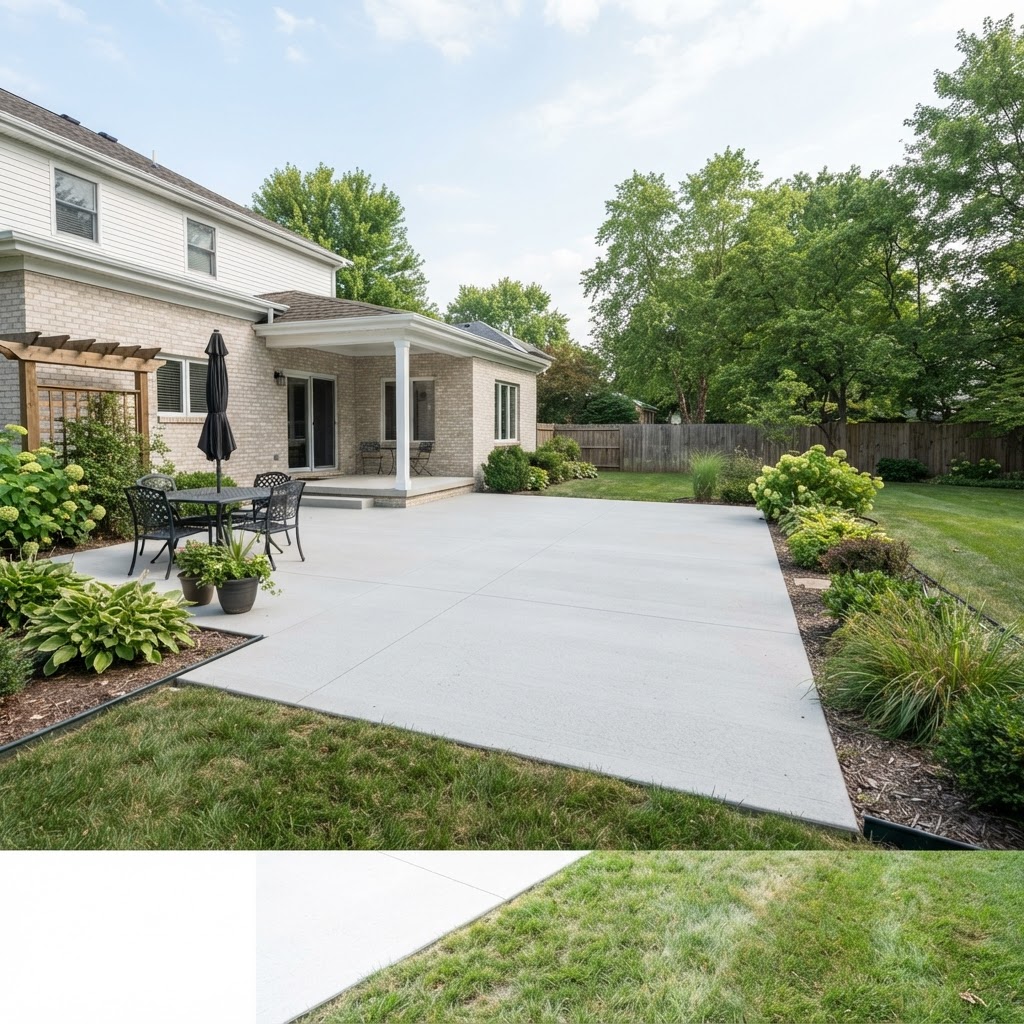
- Patios that tilt toward the house
- Stoops and steps that pulled away from the house (if the structure is still solid)
Better to replace
- Concrete that is shattered into many pieces
- Heavy scaling or crumbling on the surface
- Slabs that have been lifted repeatedly and keep failing
- Concrete too thin or poorly made to begin with
If replacement is the better route, see concrete repair and replacement or concrete driveways.
What to Expect on Leveling Day
- 1.Inspection. The contractor checks how far the slab dropped, looks for cracks and finds the cause.
- 2.Drilling. Holes are drilled in a planned pattern.
- 3.Injection and lifting. Material is pumped in slowly while the crew watches the slab rise, so it does not over-lift or crack.
- 4.Patching. Holes are filled. They will be visible, but less so over time.
- 5.Joint sealing. Gaps between slabs and along the house are often caulked so water stays out.
Most residential leveling jobs take hours, not days.
Cost of Concrete Leveling
Leveling is usually priced by the job or by the slab, not by the square foot. As a general rule, lifting a slab often costs a fraction of tearing it out and pouring new concrete, but the exact price varies with how many slabs, how far they dropped, the method and access. Please treat any figure you see online as a general range, and call (317) 798-0634 for a free quote on your slab. Our concrete cost guide compares leveling with replacement.
Keeping It Level
- Extend downspouts several feet away from slabs
- Keep soil graded away from the house and walks
- Seal joints and cracks so water cannot wash out the base
- Consider concrete sealing to slow surface damage from salt and freeze-thaw
Common Leveling Jobs Around Noblesville
- Front sidewalks in established neighborhoods near downtown where trees and age have shifted squares
- Garage aprons in newer subdivisions where backfill settled after construction
- Back patios that slope toward the house and send water at the foundation
- Pool decks that settled around the coping
- Front stoops that pulled away from the porch
Not sure if yours qualifies? Send a photo through the form or call (317) 798-0634.
Frequently Asked Questions
Have a sunken slab in Noblesville?
Call (317) 798-0634 or send the short form, and a local contractor will be in touch about a free, no-obligation quote.
Related: Concrete repair and replacement · Concrete cost in Noblesville · Concrete sealing · Concrete sidewalks · Get a free quote